

DP-600 Which one when · Module 2
Lakehouse vs Warehouse vs Eventhouse: How to Choose
Three places to keep data in Microsoft Fabric, one copy in OneLake: choose by the team's skills and the shape of the data, with an exam-style question.

Microsoft Fabric gives you three places to keep data: a lakehouse, a warehouse and an eventhouse. They all store their tables in OneLake. The real question is which engine you want to work with.
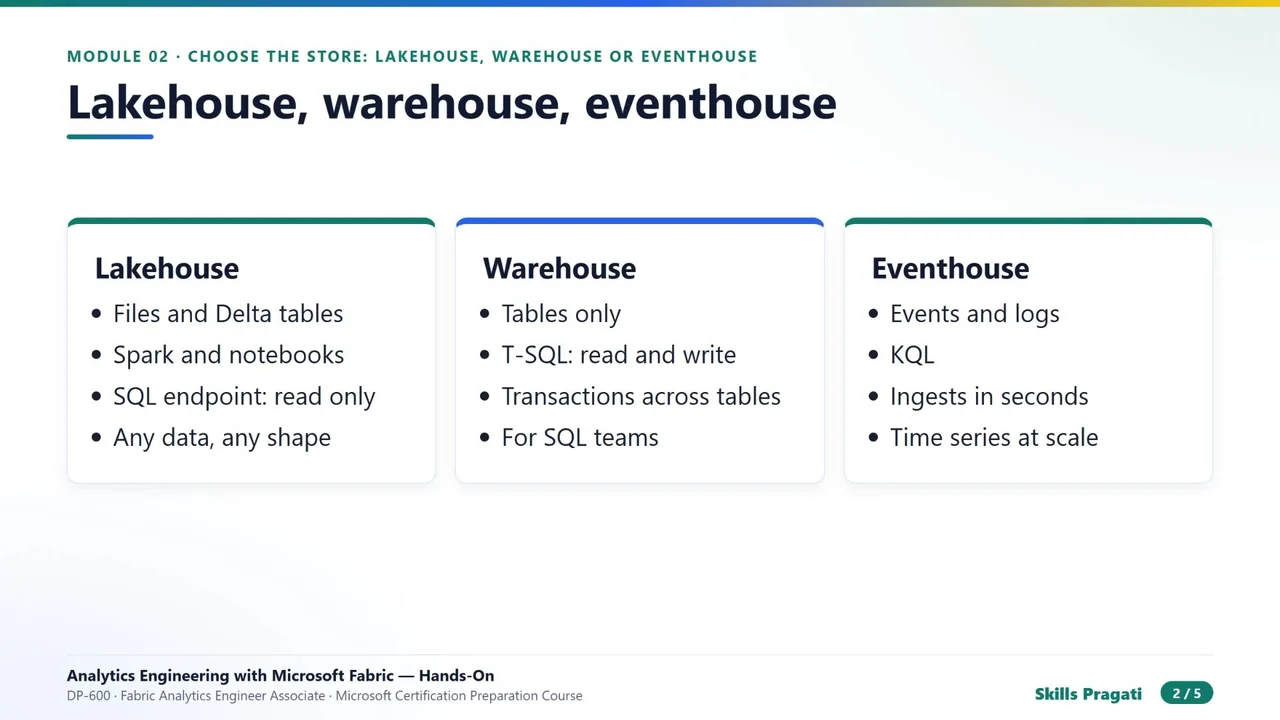
| Store | Holds | Work with it in | Best for |
|---|---|---|---|
| Lakehouse | files and Delta tables, any shape | Spark and notebooks; the SQL endpoint reads, not writes | data engineers, mixed data |
| Warehouse | tables only | full T-SQL: insert, update, delete, with transactions | SQL teams |
| Eventhouse | events and logs, time series | KQL; ingests in seconds | real time at scale |
Choose by skills and shape, not size
Choose by the skill of the team and the shape of the data. Size is not the deciding factor: all three scale.
One copy, many engines
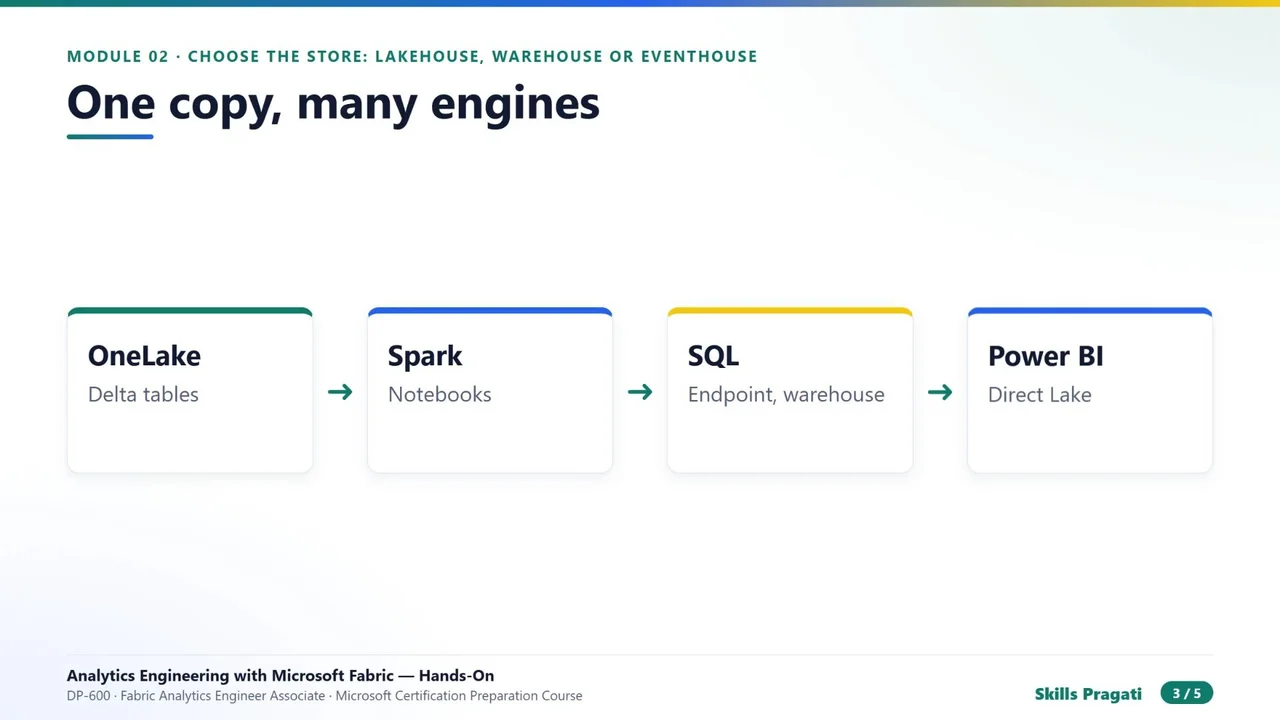
Spark reads them, SQL reads them, and Power BI reads them directly with Direct Lake. No engine needs its own copy.
An exam-style question
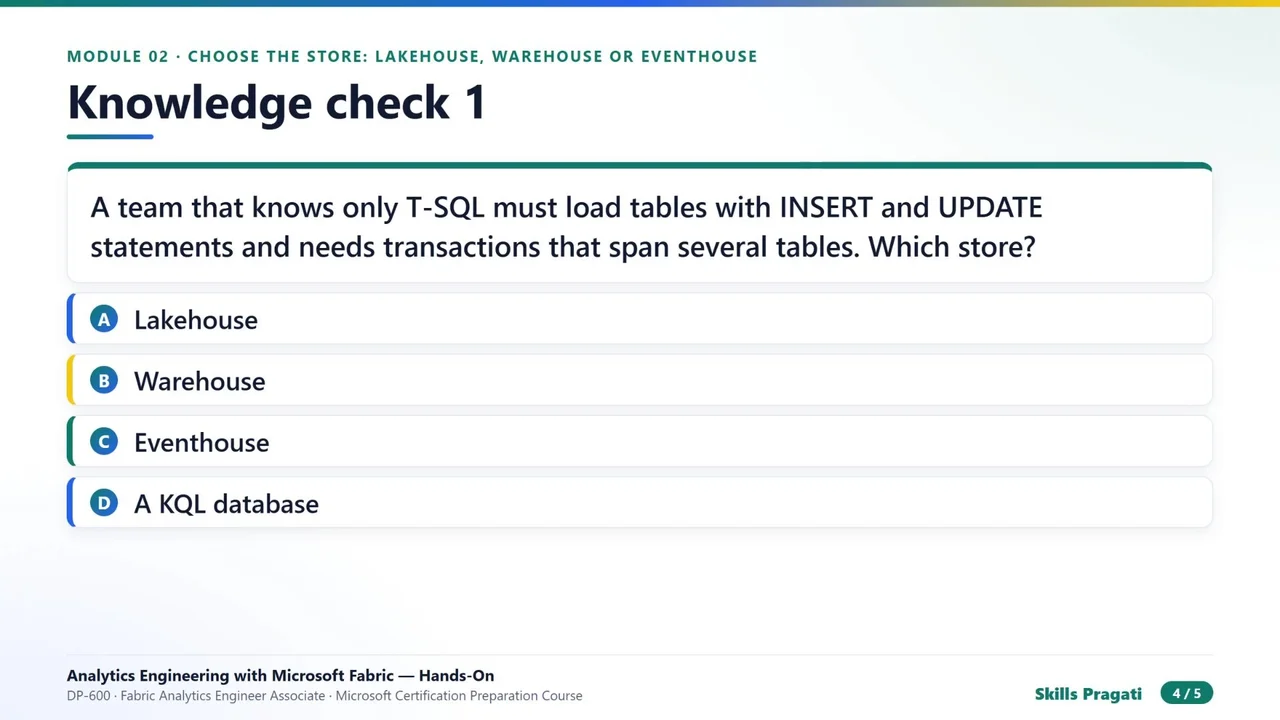
A team that knows only T-SQL must load tables with INSERT and UPDATE statements, and needs transactions that span several tables. Which store?
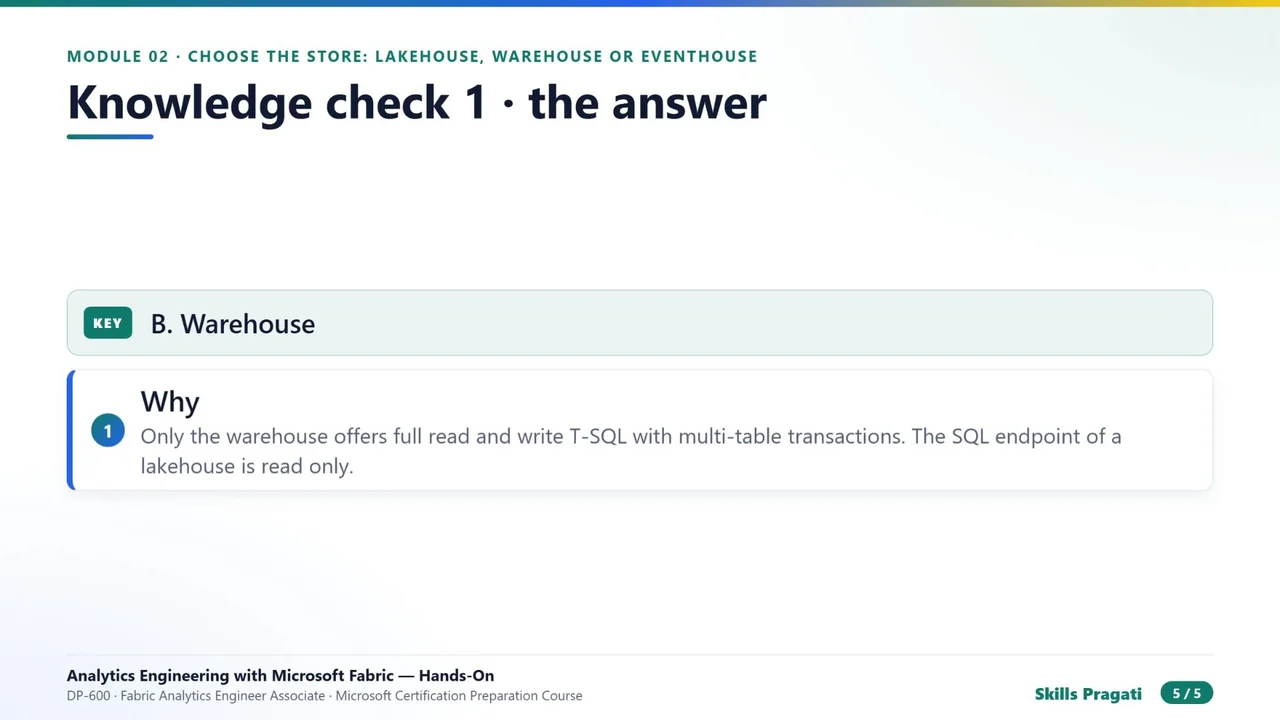
Answer: the warehouse. Only the warehouse offers full read and write T-SQL with multi-table transactions. The SQL endpoint of a lakehouse is read-only.
Quick rules
- Spark people, files and tables together? Lakehouse.
- SQL people who write with T-SQL? Warehouse.
- Events arriving every second, queried with KQL? Eventhouse.
- Many real solutions use more than one, all reading the same OneLake data.
Do it yourself
- The full DP-600 courseEvery Part, free on YouTube, in order
- Hands-on lab guideThe exact steps, what it costs, how to clean up
- Practice simulationRehearse every click in your browser; the first lab is free
- Mock examFree 10-question sample, then the full timed mock scored by domain
Lab guides, practice and full mock exams come with a subscription. See the plans