

DP-700 Which one when · Module 6
Dataflow Gen2, Pipeline or Notebook? One Job Done 3 Ways
Three Microsoft Fabric tools to bring data in and shape it, one small job done three ways, plus query folding, staging and the append trap.

Fabric gives you three tools to bring data in and shape it: a pipeline, a Dataflow Gen2 and a notebook. The exam likes to describe a situation and ask which one fits. In Module 6 of the DP-700 course we do one small job three ways, a table of public holidays, to feel the difference.
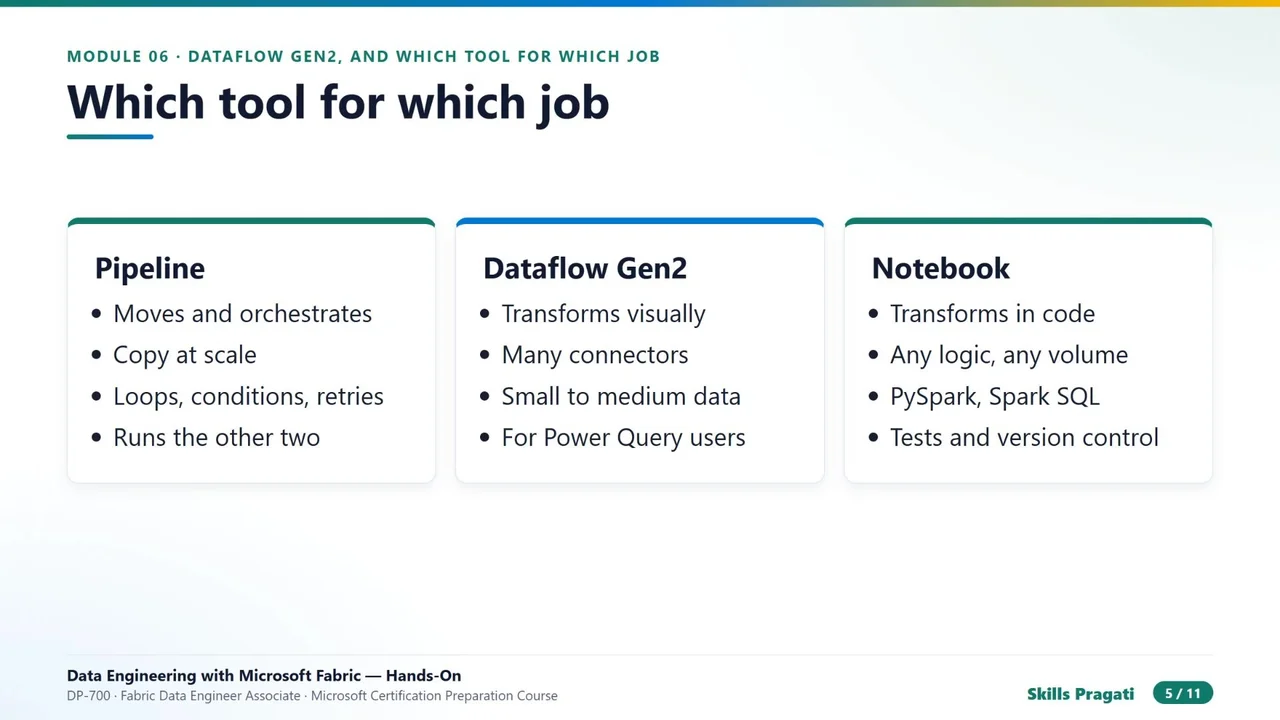
| Tool | Is for | Typical job |
|---|---|---|
| Pipeline | moving data and orchestrating: copy at scale, loops, conditions, retries; it runs the other two | copy forty monthly files and record each one |
| Dataflow Gen2 | transforming visually with Power Query, hundreds of connectors, small to medium data | an analyst maintains a small mapping table |
| Notebook | transforming in code, any logic, any volume, PySpark and Spark SQL, tests and version control | de-duplicate and merge millions of rows |
When two tools could do the job, ask one question: who will maintain it? Choose the tool that person can read.
The same job, three ways
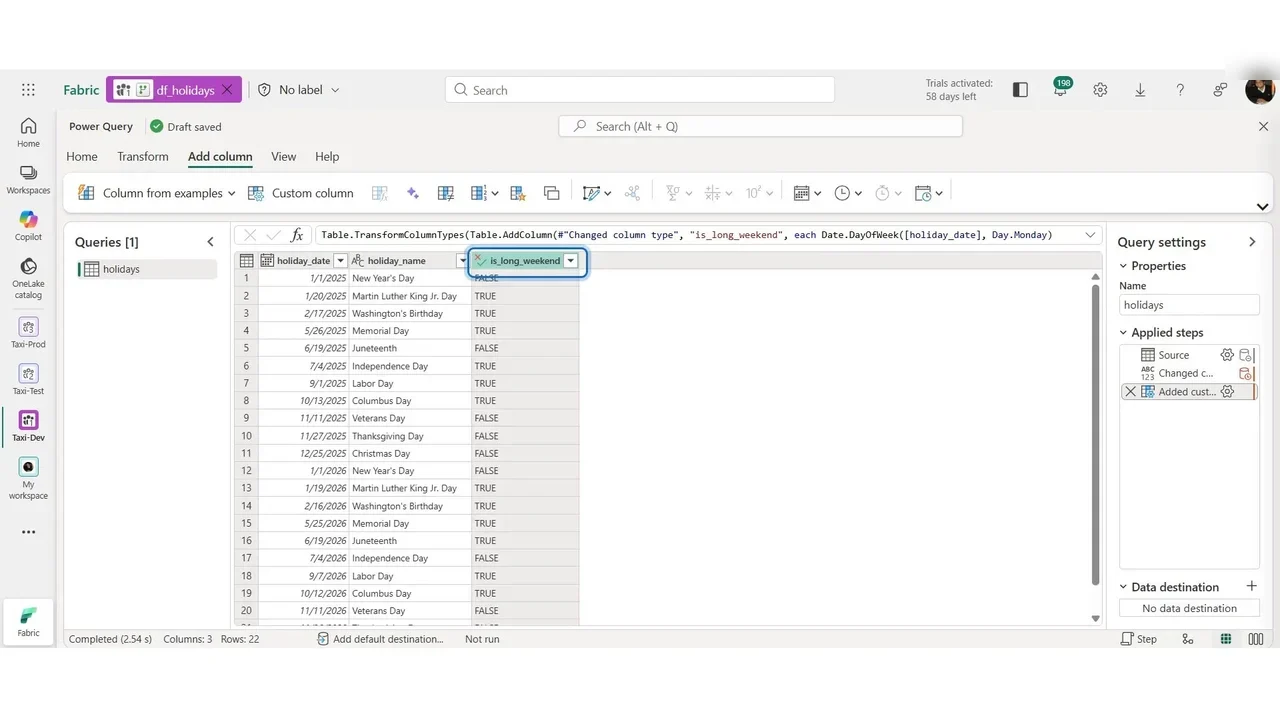
Dataflow Gen2. Power Query in the browser. Paste the 22 holidays, use the first row as headers, and add a custom column, is_long_weekend, with one formula. Every click becomes a step.
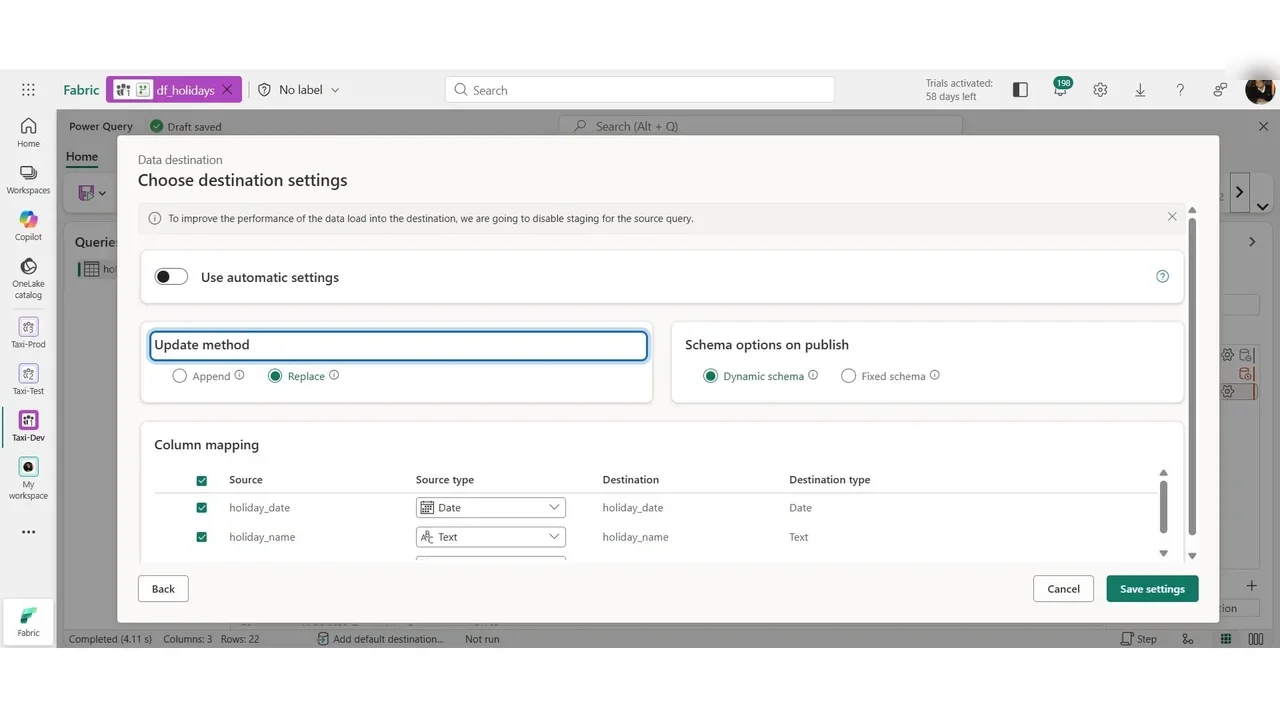
Then a data destination: the silver lakehouse, a new table, with update method Replace for a list maintained by hand.
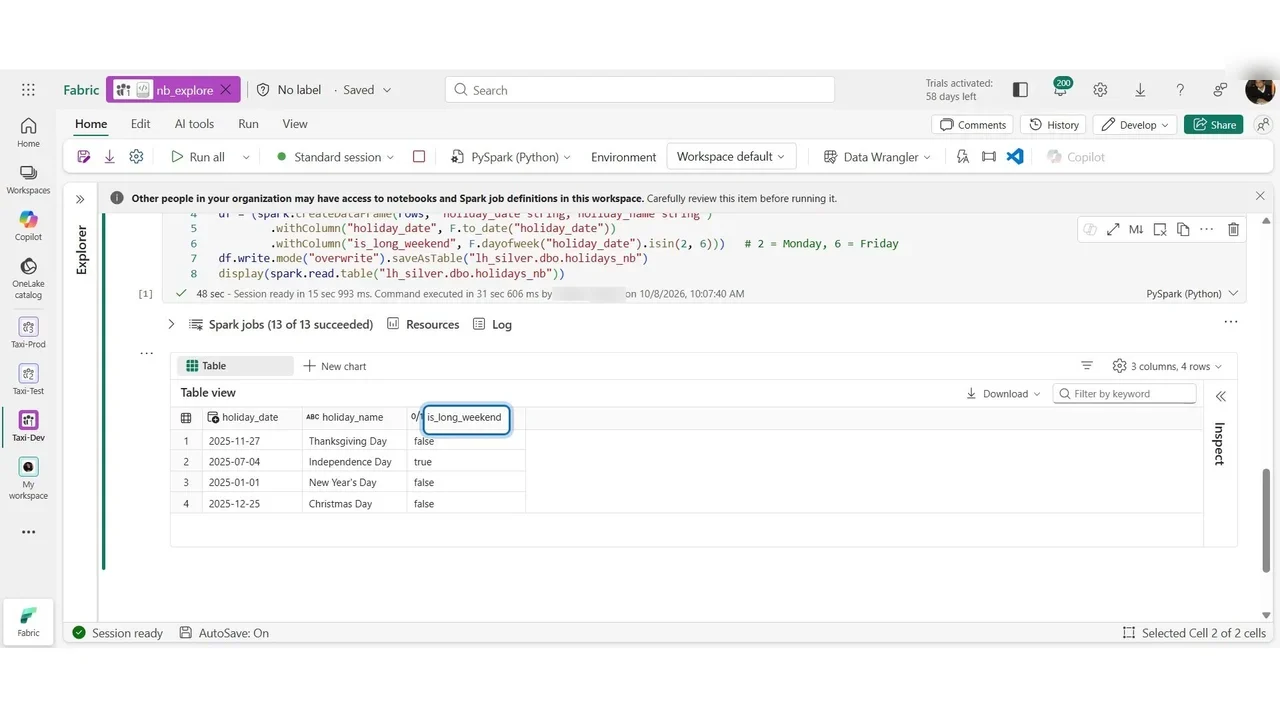
Notebook. The same table in eight lines of PySpark, which would treat a billion rows exactly the same way.
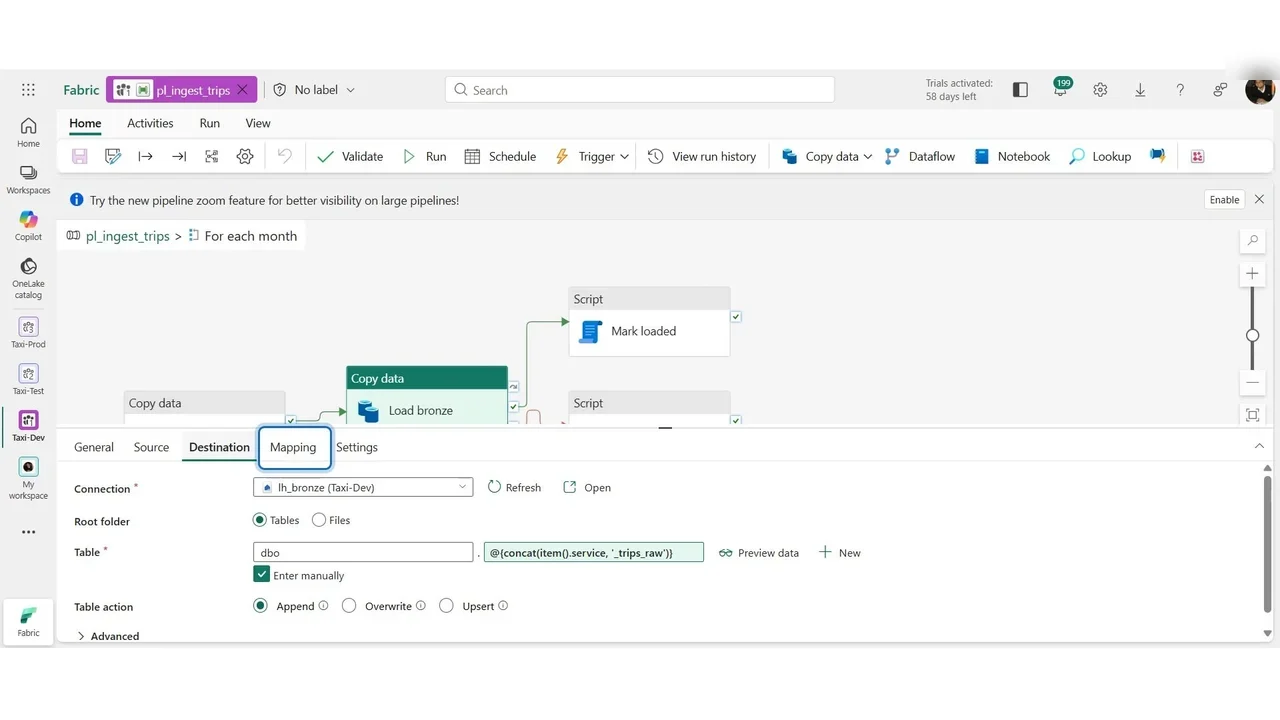
Pipeline. A Copy activity can land the two columns of the file in a table, but look for a place to compute is_long_weekend: Mapping connects and converts columns; it cannot compute.
Two ideas behind dataflow speed
- Query folding: against a database, Power Query translates your steps into one query and the source does the work. Some steps cannot fold; from that step on, the dataflow engine does the work, which is slower. Put filters early, where they still fold.
- Staging: a query first lands its result in a hidden staging lakehouse and later steps run on that copy with a faster engine. It helps large transformations; for a small query, like ours, Fabric switches it off.
The trap
The update method is set on each destination. If a dataflow reloads everything and its destination says append, the table doubles on every refresh, and nothing reports an error.
An exam-style question
A business analyst who knows Power Query must load a small reference table from a public web page into a lakehouse every week, with a few clean-up steps. Which tool fits best? Dataflow Gen2.
Do it yourself
- The full DP-700 courseEvery Part, free on YouTube, in order
- Hands-on lab guideThe exact steps, what it costs, how to clean up
- Practice simulationRehearse every click in your browser; the first lab is free
- Mock examFree 10-question sample, then the full timed mock scored by domain
Lab guides, practice and full mock exams come with a subscription. See the plans